
What is the Difference Between NAD+ and NADH? (NADH vs NAD+ 2026 Deep Dive)
NADH vs NAD+
NAD+ and NADH are two sides of the same biological coin—a coenzyme called Nicotinamide Adenine Dinucleotide. While they are chemically similar, their roles are polar opposites. NAD+ is the “oxidized” form that triggers repair and longevity genes, while NADH is the “reduced” form that carries electrons to produce energy. At Revived Personalized Wellness, Dr. Trevor Peck, MD, emphasizes that maintaining the correct NAD+/NADH ratio is the true secret to reversing cellular aging.
In the world of mitochondrial medicine, few molecules are as discussed—and as misunderstood—as NAD+ and NADH. Found in every living cell, this coenzyme pair is the engine behind your metabolism. However, as we age or face environmental stressors in Houston, the delicate balance between these two forms begins to shift, leading to a decline in energy and an increase in cellular damage.
At Revived Personalized Wellness, led by Dr. Trevor Peck, MD, we have spent 9 years specialized in NAD+ protocols. We don’t just “give a drip”; we understand the underlying biochemistry that determines how your body utilizes these molecules. This 2026 guide will break down the essential differences between NAD+ and NADH and explain why one is favored for clinical anti-aging therapy.
What Exactly is NAD+? (The Oxidized Catalyst)
NAD+ stands for nicotinamide adenine dinucleotide in its oxidized form. In chemistry, oxidation means the loss of electrons. Therefore, you can think of NAD+ as an “empty” electron transport vehicle that is actively looking to pick up passengers.
The Master Regulator
NAD+ is far more than an energy carrier. It acts as a signaling molecule that communicates with your DNA. It is the primary fuel for:
- Sirtuins: The “longevity proteins” that protect your chromosomes from aging.
- PARP Enzymes: The “cellular mechanics” that detect and repair DNA strands damaged by UV light, toxins, or stress.
- Cell Signaling: Regulating how your cells respond to inflammation and environmental changes.
As we age, our supply of NAD+ is depleted by these very repair processes. By the time you reach 50, you likely have half the NAD+ levels you had in your 20s, which is why NAD+ IV therapy has become the cornerstone of biohacking in Houston.
What is NADH? (The Reduced Energy Carrier)
NADH is the reduced form of the same molecule. In this state, the NAD+ has successfully “picked up” a hydride ion (a proton and two electrons). It is now a “loaded” vehicle ready to deliver energy to the cell’s power plants: the mitochondria.
Fueling the Electron Transport Chain
NADH is produced during the breakdown of the food you eat (glucose and fats). Once formed, it travels to the inner membrane of the mitochondria, where it donates its electrons to the Electron Transport Chain (ETC). This process is what ultimately generates ATP, the chemical fuel that powers your heart, brain, and muscles.
In simple terms, without NADH, your cells could not breathe or create energy. However, having too much NADH relative to NAD+ can actually be a sign of metabolic dysfunction, often seen in conditions like chronic inflammation or metabolic syndrome.
NAD+ vs NADH: Side-by-Side Comparison
| Feature | NAD+ (Oxidized) | NADH (Reduced) |
| Chemical State | Electron Acceptor (“Empty”) | Electron Donor (“Full”) |
| Primary Function | DNA Repair & Longevity Signaling | ATP Energy Production |
| Aging Impact | Levels decline with age | Often stays high or imbalanced |
| Clinical Goal | Replenish for Anti-Aging | Support Mitochondrial Flux |

How Do They Work Together? (The NAD Cycle)
NAD+ and NADH are part of a continuous loop. During cellular respiration, NAD+ accepts electrons and turns into NADH. Then, NADH delivers those electrons to the mitochondria and turns back into NAD+. This cycle must happen thousands of times per second for your cells to remain healthy.
Dr. Trevor Peck often describes this as a “rechargeable battery.” NAD+ is the battery when it needs a charge, and NADH is the battery when it is full and ready to do work. The problem is that as we age, the “battery casing” (the total pool of NAD) gets smaller, and the “charging mechanism” (the enzymes that recycle NADH back to NAD+) gets sluggish.
The Importance of the NAD+/NADH Ratio
In 2026, researchers have identified that the ratio between these two molecules is more important than the absolute amount of either one. A healthy cell should have a high ratio of NAD+ to NADH (often 700:1 in the cytoplasm). This high ratio creates a “pull” that keeps metabolic reactions moving forward.
When this ratio drops (meaning you have too much NADH and not enough NAD+), your metabolism stalls. This is linked to:
- Increased Oxidative Stress: More free radicals are produced, damaging cell membranes.
- Inactivated Sirtuins: The genes that keep you young “turn off” because there isn’t enough NAD+ fuel.
- Weight Gain: The body becomes less efficient at burning fat for fuel.
Can You Supplement Both?
Yes, both are available, but they serve different clinical purposes.
Supplementing with NADH
NADH supplements are often used by those seeking an immediate energy boost or support for chronic fatigue syndrome (CFS). Because NADH is the direct electron donor, it can help kickstart ATP production. However, NADH is notoriously unstable and can be easily destroyed by stomach acid, which is why Revived Wellness offers advanced delivery methods.
Supplementing with NAD+ (The Gold Standard)
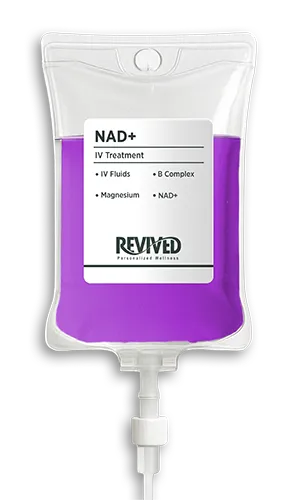
NAD+ is the preferred choice for anti-aging, brain health, and DNA repair. At our Houston Personalized Wellness Clinic, we prioritize NAD+ IV Therapy because it enters the bloodstream with 100% bioavailability, immediately raising the NAD+/NADH ratio and triggering systemic repair.
💡 Why IV Therapy Wins Over Oral Supplements:
While you can find NAD+ and NADH pills, they are often broken down into precursors like NMN or NR in the gut. While helpful, they cannot achieve the “oxidative burst” required for rapid neuro-regeneration. Dr. Trevor Peck’s IV protocols ensure that your brain and heart receive the pure molecule exactly where it’s needed most.
Safety and Precision at Revived Wellness Houston
Choosing between NAD+ and NADH isn’t a decision you should make alone. At Revived Personalized Wellness, our 9 years of experience allow us to customize your treatment.
- MD Supervision: Dr. Trevor Peck evaluates your metabolic health before recommending a protocol.
- Custom Blends: We often combine NAD+ with B-vitamins and Glutathione. These act as “co-factors” that help your body recycle NADH back into NAD+ more efficiently.
- Houston’s Leading Tech: We use precision infusion pumps to manage the drip rate, ensuring your body absorbs the coenzyme without the side effects of “rushing” the process.
Conclusion: Balancing Your Cellular Future
Understanding the difference between NAD+ and NADH is the first step toward taking control of your biological clock. While NADH fuels the fire of energy, NAD+ is the architect that ensures the building (your body) remains standing for decades to come.
Ready to Optimize Your Cellular Ratio?
Don’t settle for fatigue or brain fog. Visit Revived Personalized Wellness on 1640 Fountain View Dr, Suite B, Houston, TX 77057 and let Dr. Trevor Peck or Medical Team design an NAD+ strategy that works for you. Call us today at 855-483-7477 to schedule your consultation.
Frequently Asked Questions: NAD+ vs. NADH
1. Is NADH the same as Vitamin B3?
NAD+ and NADH are derivatives of Vitamin B3 (Niacin). While your body can make them from B3, direct supplementation or IV therapy is much more effective for therapeutic goals because it bypasses the complex conversion steps in the liver.
2. Which one helps more with “Brain Fog”?
NAD+ is typically superior for brain fog because of its role in neuro-protection and DNA repair. However, adding NADH can provide the raw energy needed if the fog is caused by extreme physical exhaustion.
3. Can I take NAD+ and NADH together?
Yes, they can be synergistic. In some advanced metabolic protocols, we use both to support different parts of the Krebs Cycle. Always do this under the guidance of an MD like Dr. Trevor Peck.
4. Does NADH have side effects?
NADH is generally very safe. Some people report mild over-stimulation if taken late at night, similar to NAD+. At Revived Wellness, we monitor your response to ensure your nervous system stays balanced.
5. Why do NAD+ levels drop as we get older?
Levels drop because of two reasons: our bodies produce less as we age, and enzymes like CD38 (which increases with inflammation) actively destroy NAD+. IV therapy helps overcome this “drain” on your system.
6. How long does an NAD+/NADH session take?
A typical session at our Houston clinic lasts between 2 to 4 hours, depending on the dose. We provide a relaxing environment so you can work or rest while your cells recharge.
Ready for NAD+ IV Therapy in Houston?
If you're a Houston resident looking to experience the benefits of NAD+ IV Therapy, you're in the right place. Our clinic provides professional and specialized NAD+ IV Therapy tailored to your needs.